

Sierra-Cascade RFFCP Celebrates Past Work, Builds Future Momentum at Summit
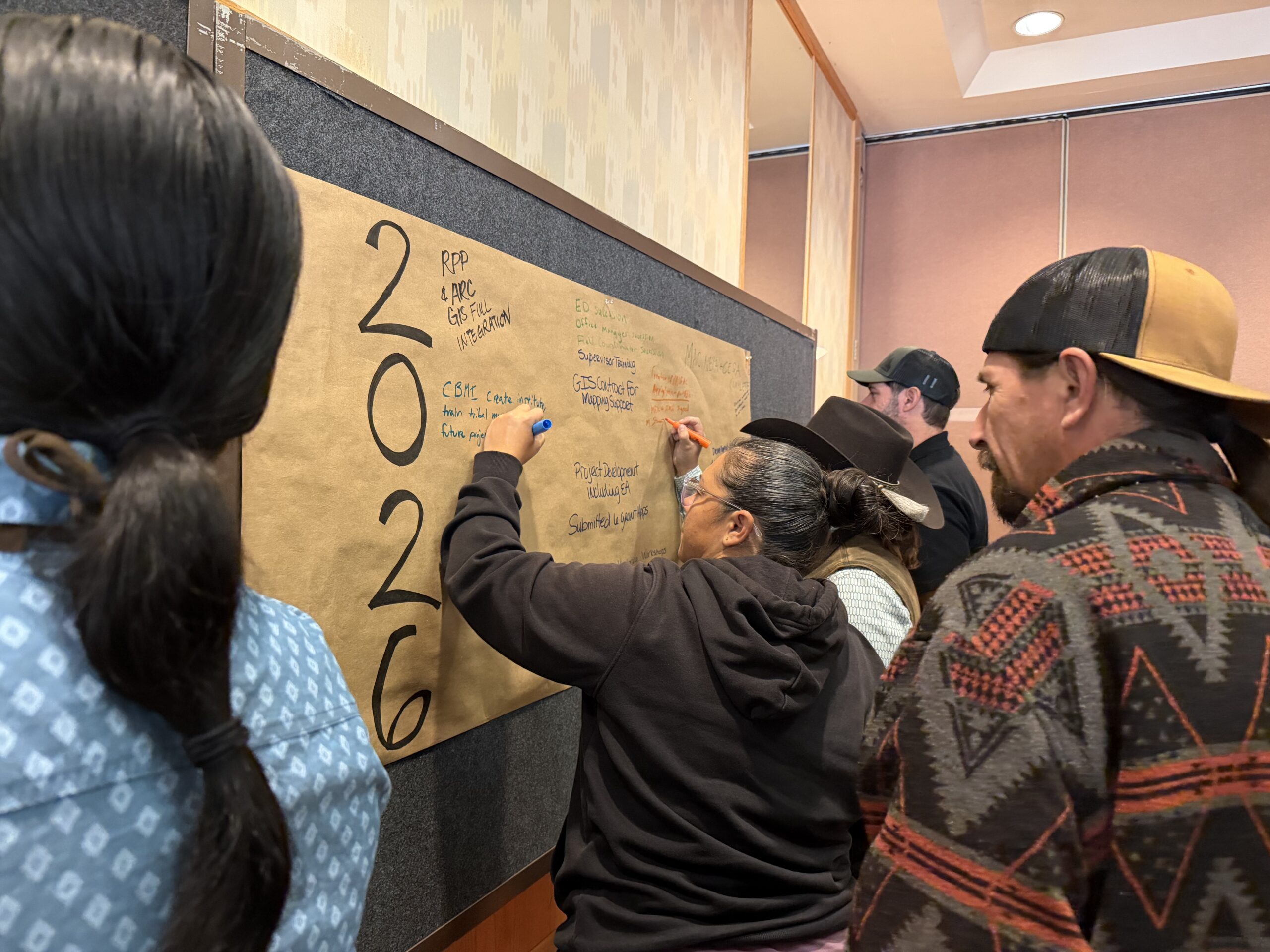
On October 13 & 14, the Sierra Nevada Conservancy (SNC) hosted an in-person event in Tahoe City to discuss success stories, collaboration, and capacity growth for all the organizations involved with the Sierra-Cascade region of the state’s Regional Forest and Fire Capacity Program (RFFCP).
In 2019, the RFFCP awarded the SNC $1.9 million to cover its 25,000-acre region. Today that total has not only grown to nearly $25 million, but through the hard work and dedication of Sierra-Cascade partners it has led to an additional $304 million in leveraged funds, giving the participants at the event much to share and celebrate.
“What I think is very cool is the Sierra Nevada Conservancy covers a quarter, maybe a third of our program’s geography and it has contributed a ton to our statewide metrics and success stories,” Hannah Page, grants manager with the RFFCP at the Department of Conservation, said. “It is very, very impressive what we are able to accomplish together!” Statewide, RFFCP block grantees have leveraged an additional $600 million for wildfire risk reduction projects.
The California Natural Resources Agency’s Department of Conservation created the RFFCP in 2018. The program provides directed block grants to state conservancies, resource conservation districts, and other entities to support regional planning, project development, demonstration projects, and community outreach. These block grant recipients then subgrant out funds to partners to facilitate regional coordination for forest health and wildfire resilience.
In 2019, the SNC, which represents the Sierra-Cascade region, received $1.9 million from the RFFCP. In 2022, that number rose to $7.7 million and in 2023 it climbed to $15.3 million, which includes $1.9 to a new Tribal Capacity Building Pilot Program. While the Greenhouse Gas Reduction Fund funded the first grant round, the General Fund funded the next two.
To date, the RFFCP has allocated $140 million to programs across California, with another $185 million in the near future coming from Proposition 4 (the Climate Bond).

At the two-day event, more than 60 members from nonprofits, resource conservation districts (RCDs), Fire Safe Councils, local governments, and tribes throughout the Sierra-Cascade met to discuss and share stories on how the RFFCP has helped their organizations expand capacity and improve skills and knowledge to effectively advance the planning and implementation of forest-health projects that build wildfire resilience in their respective regions.
“Through the RFFCP funding and other DOC funding that our RCDs have received, we’ve been able to develop our natural and working lands hub of RCDs, which not only has us focusing on fires and fuels, but also on agriculture and natural working lands management more holistically,” Amanda Watson, executive director of the Amador Resource Conservation District and Amador Fire Safe Council, said. “Through these partnerships, we’ve strengthened ties among RCDs and other partners, finding new ways to increase the scope and scale of our work. It’s really been about building lasting relationships and creating the space to identify shared priorities and align our efforts.”
Funding and support from the RFFCP also helped increase the capacity to implement landscape-scale work.
“For the South Lassen Watershed Group, we got planning funds for the West Lassen Headwaters Project. It’s about 100,000 acres and while we were writing the NEPA (National Environmental Policy Act), we got (RFFCP) funding that supported the collaborative capacity to go above and beyond what was required and actually solicit what the community was looking for – their interests, their values, and how that differs across the 100,000-acre landscape and incorporate that into the documents so implementation is now ready for any and all work,” Vincent Vitale, rural community outreach coordinator with the Sierra Institute for Community and Environment, said.
In Madera and Mariposa counties, RFFCP funding not only helped plan for critical fuels-reduction projects but help plan and implement cross-jurisdictional fuelbreaks.
“Fire doesn’t know county lines and neither do we and that’s why Mariposa and Madera counties are uniting and we’re developing a Sierra National Forest project portfolio across the Sierra National Forest and also the MMU (CAL FIRE Madera-Mariposa-Merced Unit) master plan that includes a master fuelbreak that runs across both counties,” said Lacey Sharp, executive director of the Mariposa Fire Safe Council.
In three rounds of funding from the SNC, subgrantees have reported that 72 new permanent positions have been established in organizations throughout the Sierra-Cascade, with 75 new partnerships and collaborations created and an expansion of 63 additional partnerships and collaborations. Planning and permitting has been supported in all 24 counties within the SNC service area and the nearly $25 million from the Department of Conservation to the SNC so far has helped RFFCP recipients raise roughly $304 million more in leveraged funds to help plan and implement wildfire-resilience projects.
The success of the RFFCP reflects the state investments combined with the dedication, passion, and knowledge of the people and organizations looking to protect their communities and natural landscapes from wildfire and other disturbances.
According to Bridget Fithian, executive director of the Sierra Foothill Conservancy, the entire RFFCP has been an uplifting experience.
“The spirit of collaboration that is the core values of the SNC and the Department of Conservation and the folks working there, it is really an incredible spirit that helps uplift all of us and the work we are doing in our communities,” she said. “I think one of the things that is unique about the RFFCP and SNC’s approach is they are really listening and investing in our local communities and hearing from all of us about what we think would work best for our communities and I think that is a unique approach that you don’t always see in state and federal agencies.”
Legal Disclaimer:
EIN Presswire provides this news content "as is" without warranty of any kind. We do not accept any responsibility or liability for the accuracy, content, images, videos, licenses, completeness, legality, or reliability of the information contained in this article. If you have any complaints or copyright issues related to this article, kindly contact the author above.
